

Top 100 Products | Request a Quote
Marine Rubber Fenders for Docks, Barges, Tugs, Piers, and Vessels
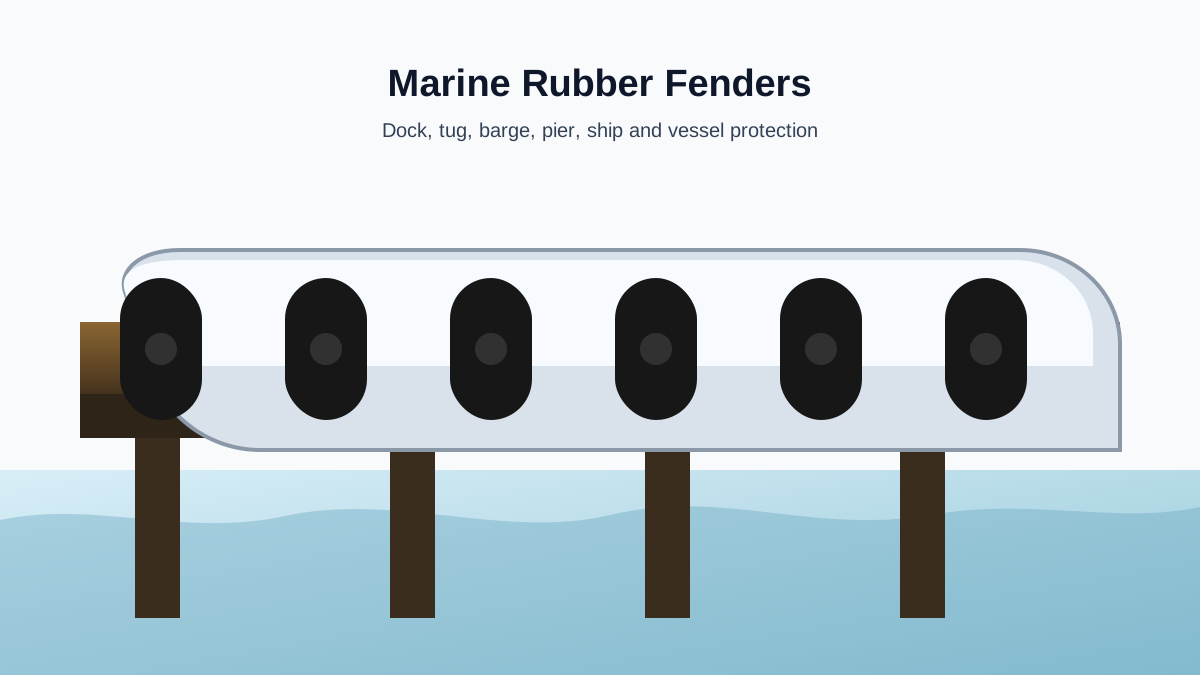
Marine rubber fenders protect docks, piers, barges, tugs, vessels, ships, loading areas, and industrial waterfront structures from berthing, mooring, and pushing impacts. Buyers may also search for these products as marine boat bumpers, boat dock bumpers, dock fenders, pier fenders, barge fenders, tug fenders, rubber dock fenders, ship fenders, or vessel fenders.
Intro Summary
The marine rubber fender product family includes heavy-duty waterfront protection for commercial docks, industrial waterfront operations, shipyards, tug and barge fleets, marinas, port facilities, and maintenance teams. According to the supplied Mechanical Rubber Marine Fender Catalog, the first rubber marine fenders were developed and installed by Goodyear in 1933, and Mechanical Rubber purchased the marine fender business in 2025 after prior ownership by Longwood Elastomers.
These fenders are selected when the application needs impact absorption, practical installation options, long service life, and resistance to harsh harbor conditions. Selection should be based on the pier structure, vessel type and size, berthing velocity, berthing method, currents, wave action, mounting method, and replacement requirements.
What Marine Rubber Fenders Are Used For
Marine rubber fenders work as a controlled buffer between moving vessels and fixed or floating structures. They help absorb high-energy impacts caused by docking, mooring, vessel movement, towboat pushing, barge handling, currents, and wave action. The right fender profile helps reduce damage to both the structure and the vessel.
- Dock fenders and rubber dock fenders for commercial waterfront structures
- Marine dock fenders and boat dock bumpers for marinas and service docks
- Tug fenders and barge fenders for pushing, fleet, and workboat service
- Pier fenders, vessel fenders, and ship fenders for port and terminal protection
- Industrial waterfront protection for loading docks, heavy equipment areas, and maintenance sites
Product Type Grid
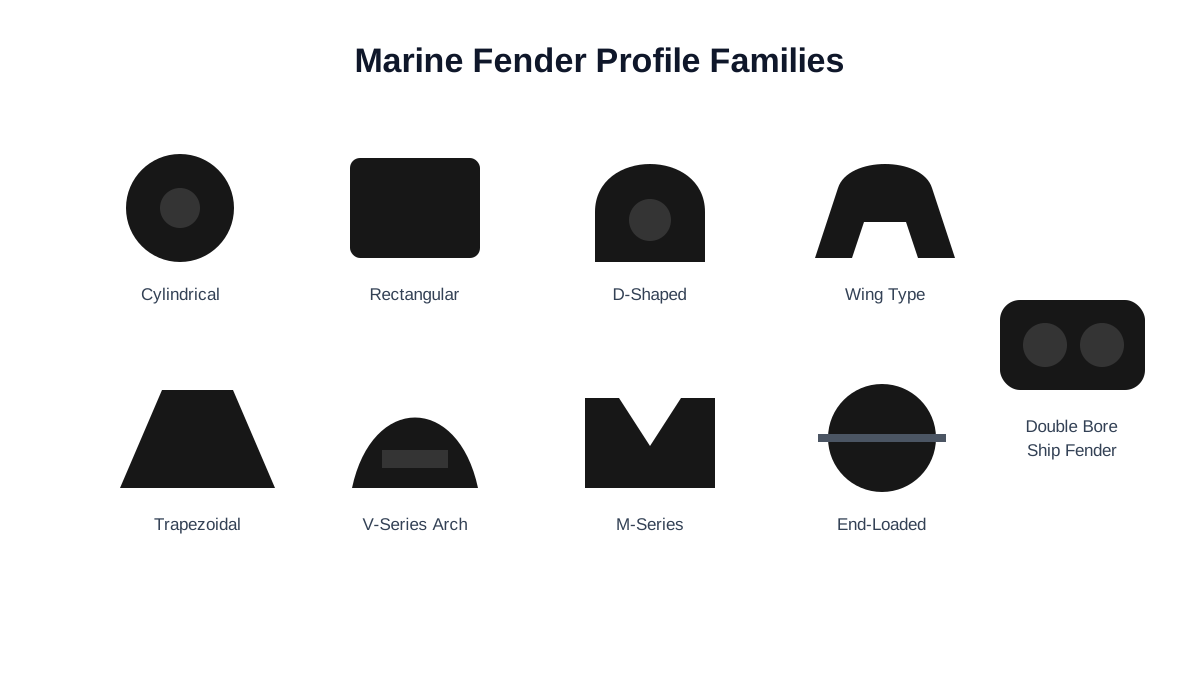
Cylindrical Marine Fenders
Cylindrical fenders are round rubber profiles often used where flexible mounting is preferred, including areas with tidal movement.
Rectangular Marine Fenders
Rectangular fenders are practical for rigid mounting and straight protective runs on vessels or harbor structures.
D-Shaped Marine Fenders
D-shaped fenders provide a stable contact face and are commonly used where broad coverage and solid mounting are needed.
Wing Type Marine Fenders
Wing type fenders include integral mounting wings that make attachment direct and useful for vessel or dock surfaces.
Trapezoidal Dock Fenders
Trapezoidal dock fenders are designed to use rubber elasticity efficiently while managing reaction loads.
V-Series Arch Fenders
V-Series arch fenders provide cushioning with a profile suited for timber-facing and impact distribution systems.
M-Series Fenders
M-Series fenders support small vessel dock structures and can also be used in industrial property protection.
End-Loaded Cylindrical Fenders
End-loaded cylindrical fenders are used where impact load is applied along the axis of the fender system.
Double Bore Ship Fenders
Double bore ship fenders are large ship fender profiles for heavy marine applications and vessel-facing protection.
Fender Selection Guide
| Selection Factor | Why It Matters |
|---|---|
| Pier or dock structure | The structure determines whether rigid mounting, flexible mounting, timber-facing, or load-spreading hardware is practical. |
| Vessel type and size | Tugs, barges, small vessels, large ships, and service boats apply different contact patterns and loads. |
| Berthing velocity and method | Higher approach energy may require a fender profile with greater energy absorption and controlled reaction. |
| Currents and wave action | Moving water changes how vessels contact the dock and how frequently fenders cycle under load. |
| Environment and compound | Marine growth, contaminants, abrasion, weather, ozone, oil, chemicals, and temperature extremes can affect compound selection. |
For replacement work, include the existing fender profile, bore size, outside dimensions, length, mounting details, photos, drawings, quantity, and service conditions with the request for quote.
Applications By Industry
Ports and Terminals
Ship fenders, pier fenders, and dock fenders for berthing lanes, terminals, and waterfront structures.
Tug and Barge Operations
Tug fenders and barge fenders for pushing, fleet handling, and heavy commercial contact zones.
Marinas and Boat Yards
Marine boat bumpers, boat dock bumpers, and marine dock fenders for smaller vessel protection.
Industrial Waterfronts
Rubber dock fenders and M-Series protection for loading docks, work areas, service docks, and maintenance equipment.
Why Rubber Fenders Are Used Instead Of Wood, Rope, Or Rigid Materials
Rubber fenders help protect structures and vessels because the rubber body can deflect under impact and recover after loading. The supplied catalog notes that rubber is useful in harsh harbor environments because it resists cutting, gouging, abrasion, contaminants, industrial effluents, marine growth, termites, borers, and other insects. That combination makes rubber a practical choice for waterfront protection where maintenance access, weather, traffic, and impact cycles all matter.
Available Fender Types
- Cylindrical marine fenders
- Rectangular marine fenders
- D-shaped marine fenders
- Wing type marine fenders
- Trapezoidal dock fenders
- V-Series arch fenders
- M-Series fenders
- End-loaded cylindrical fenders
- Double bore ship fenders
Related internal product references: Dock Fenders, Black Rubber Marine Dock Fenders Bumpers, Marine Hoses, Dock Hose, and Parker Titan Petroleum Dock Hose.
Request A Quote For Marine Rubber Fenders
Send the fender type, dimensions, quantity, application, vessel or dock details, mounting method, photos, drawings, and service conditions. The team can review the requirement and help match marine rubber fenders to the application.
FAQ
- What are marine rubber fenders?
- Marine rubber fenders are rubber profiles used between vessels and waterfront structures to absorb impact energy during berthing, mooring, pushing, and docking operations.
- Are marine rubber fenders the same as marine boat bumpers?
- Many buyers use the phrase marine boat bumpers when searching for marine rubber fenders, boat dock bumpers, dock fenders, or rubber dock fenders. The right term depends on the vessel, dock, and application size.
- Which fender type is best for a tug or barge?
- Tug fenders and barge fenders are selected by profile, mounting method, contact area, pushing load, vessel size, and operating conditions. D-shaped, rectangular, cylindrical, and heavy ship fender profiles may all be considered depending on the layout.
- What information is needed to request a quote?
- Provide profile type, dimensions, length, bore size, compound or color if known, quantity, mounting details, vessel or dock application, photos, drawings, and environmental conditions.
- Why choose rubber dock fenders instead of wood or rope?
- Rubber dock fenders compress under load, recover shape, absorb impact energy, and resist abrasion, cutting, gouging, contaminants, marine growth, termites, borers, and harsh harbor conditions.
- Did Goodyear develop the first rubber marine fenders?
- The supplied Mechanical Rubber Marine Fender Catalog states that the first rubber marine fenders were developed and installed by Goodyear in 1933.